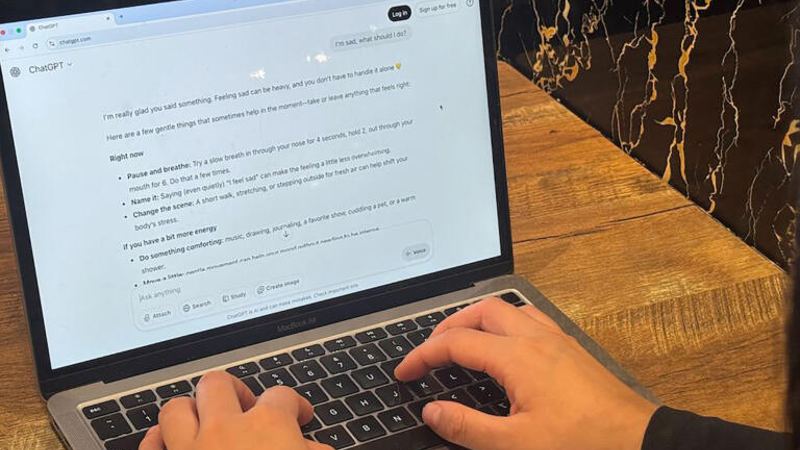
Washington state lawmakers and Governor Bob Ferguson are seeking to add mental health safeguards to AI chatbots through new legislation. House Bill 2225 and Senate Bill 5984 would require companion chatbots to notify users they are interacting with AI and not a human at the beginning of the interaction and every three hours. If someone seeks mental or physical health advice, the chatbot operator would have to issue a disclosure that the AI system is not a health care provider. Chatbot operators would also have to create protocols for detecting self-harm and suicidal ideation and provide referral information for crisis services.
The legislation is part of a growing national trend, as some other states have passed laws aiming to prevent chatbots from offering mental health advice. A number of wrongful death lawsuits have been filed against OpenAI, maker of ChatGPT, blaming the platform for suicides that occurred after users discussed plans to end their life with the chatbots.
Scale of the Challenge
OpenAI estimates that in any given week, about 0.15% of ChatGPT’s users have conversations that “include explicit indicators of potential suicidal planning or intent,” and 0.07% of users “indicate possible signs of mental health emergencies related to psychosis or mania.” In late 2025, the company said it had more than 800 million weekly users—indicating that about 1.2 million people per week are discussing suicide with ChatGPT and about 560,000 are showing signs of psychosis or mania. The company has worked to improve how ChatGPT detects and responds to conversations related to mental health or self-harm, with more than 170 mental health professionals contributing by writing responses, analyzing outputs, and providing feedback.
Special Protections for Minors
Washington’s proposed bills would create additional protections for minors, requiring chatbots to notify them at least once per hour that they are interacting with AI and not a human. Operators would be required to “use reasonable measures” to prevent chatbots from generating sexually explicit content and would be prohibited from engaging in manipulative engagement techniques, including mimicking a romantic partnership.
The bills define companion chatbots as “a system using artificial intelligence that simulates a sustained humanlike relationship with a user.” Violations would be enforceable under the Consumer Protection Act, allowing people to file civil suits against companies to recover damages. The attorney general’s office could also bring cases in the name of the state. Both bills have passed out of their respective committees but are not yet scheduled for floor votes.
This article is an AI-assisted summary. All facts and figures are drawn from the original report: https://www.columbian.com/news/2026/feb/12/washington-considers-requiring-ai-companies-to-add-mental-health-safeguards/