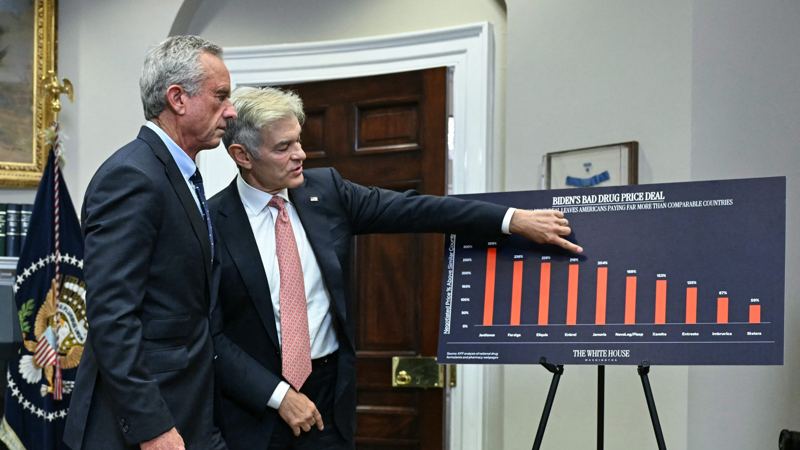
The Trump administration launched a $50 billion Rural Health Transformation Program funded through working families tax cut legislation, targeting healthcare disparities in rural communities. The program awards funds to all 50 states to address the fact that more than 60 million Americans living in rural areas experience poorer health outcomes and higher rates of chronic disease than urban and suburban peers.
The Rural Health Transformation Program empowers states to boost healthcare recruitment and retention efforts, train existing workforces, introduce new technologies, expand telehealth, improve emergency and behavioral care, strengthen partnerships among rural providers, roll out innovative payment models, and promote nutrition and exercise programs. Robert F. Kennedy Jr., Secretary of the Department of Health and Human Services, framed the initiative as addressing a long-standing disparity: “For decades, lobbyists, think tankers and health system executives who shape our health policy spent as little time as possible in ‘flyover country’ and have instead steered resources toward big cities.”
Innovative state proposals
States submitted diverse proposals. Alabama requested funds for a “telerobotic ultrasound” initiative enabling pregnant women in rural areas to access anatomy scans without long-distance travel. Delaware outlined plans to increase productivity by introducing artificial intelligence-powered clinical documentation tools. Alaska proposed drone medication delivery; Georgia planned to place obstetric carts in rural emergency rooms lacking obstetricians; Arizona established rural clinical rotations to address workforce shortages; and Nebraska planned to transform rural school kitchens to promote healthier food choices and lower childhood obesity.
Kennedy and Dr. Mehmet Oz, administrator of the Centers for Medicare & Medicaid Services, argued the targeted approach is preferable to broad Medicaid spending increases, noting that rural hospitals receive only 7% of total Medicaid hospital spending despite their critical role serving rural communities.
This article is an AI-assisted summary. All facts and figures are drawn from the original report: https://www.usatoday.com/story/opinion/2026/01/08/healthcare-rural-health-transformation-program/87996663007/