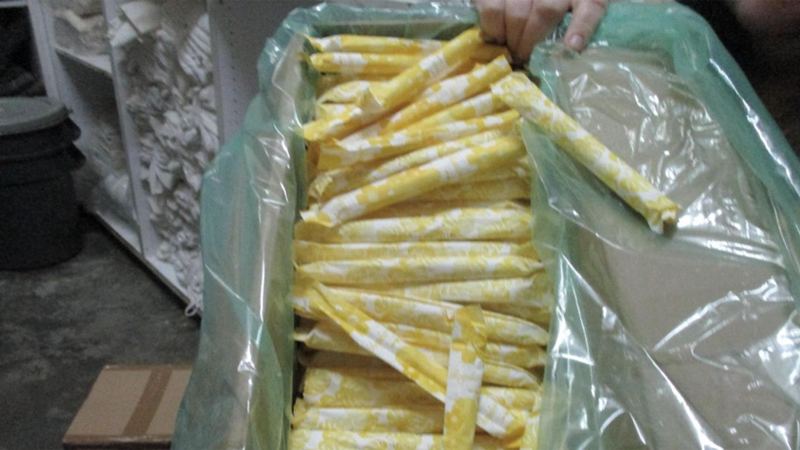
Incarcerated women in the United States often lack sufficient access to menstrual products, despite growing legislative efforts to improve conditions. Even where menstrual products are available, limited supplies, low-quality products, strict disciplinary rules, and delays in medical care result in health issues or disciplinary write-ups, according to research from the Prison Policy Initiative.
Yraida Faneite’s experience in federal prison illustrates the systemic problem. During her trial for drug-related charges, the judge halted proceedings because her period was so heavy that blood was running down her legs. After conviction, officials allowed her only a small ration of menstrual products, which she couldn’t supplement from the commissary. She bartered with other women and, on her worst days, tore up her own T-shirts for makeshift pads. When she told officers she needed medical care and couldn’t safely continue a mandatory kitchen shift, she was placed in solitary confinement. She eventually discovered her heavy bleeding was caused by cysts. Faneite, released in 2006, went on to found the YG Institute, a prison reentry nonprofit.
Policy changes and remaining gaps
Menstruation is still regularly treated as a disciplinary matter through contraband rules, work violations, and sanitation write-ups, even in facilities providing free products. These actions affect parole eligibility, access to programming, and services. Women make up a growing share of the state prison population, rising about 5 percent nationwide from 2022 to 2023. At least 24 states and Washington, D.C., require free menstrual product access in state prisons or local jails, and federal correctional facilities have provided free products since 2017. More than a dozen states passed versions of the Dignity of Incarcerated Women Act with provisions for period product access and quality. Ohio’s legislature recently passed legislation to strengthen access, while Wisconsin lawmakers introduced a bill. However, nearly every state’s rules vary widely in specifics, implementation, and enforcement. Miriam Vishniac, founder of the Prison Flow Project, notes that “in the system that we have where there’s very little oversight, accountability, transparency, you have no easy way of enforcement.”
This article is an AI-assisted summary. All facts and figures are drawn from the original report: https://www.reporterherald.com/2026/01/02/incarcerated-women-often-dont-have-enough-period-products/