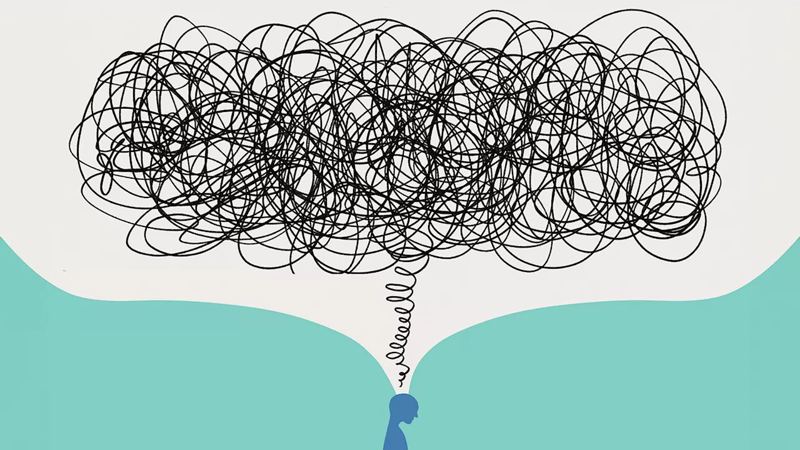
Nipping negative repetitive thinking in the bud has the potential to stave off numerous mental health disorders, according to emerging research on transdiagnostic approaches to mental health treatment. Rather than focusing on traditional diagnostic categories, clinicians are increasingly targeting repetitive negative thinking—a pattern that transcends diagnostic boundaries and appears across depression, anxiety, obsessive-compulsive disorder, insomnia, and other conditions.
Beyond Traditional Diagnosis
Getting stuck in negative loops is part of many mental health disorders, but formal diagnoses are not necessary to help people overcome this distressing way of thinking. Thomas Ehring, a psychologist at Ludwig Maximilian University of Munich, notes that people with repetitive negative thoughts often have trouble maintaining their own well-being and relationships with others, “repeatedly thinking about without it being constructive.” Clinicians typically address negative thoughts through treatments for diagnosed disorders, but the emerging transdiagnostic approach targets the pattern itself rather than the diagnosis.
Measuring and Treating Repetitive Thinking
Some experts are utilizing scales that focus not on the content of persistent thoughts but on their underlying patterns. Several therapies have emerged targeting repetitive negative thinking directly, including Rumination-Focused Cognitive Behavioral Therapy (RFCBT). Rather than exploring why something happened or its deeper significance, these therapies help patients shift to more actionable questions, such as how they can do something about the situation.
Long-Term Promise
Research is nascent but promising. In one study of roughly 250 teens and young adults who scored high on screenings for repetitive negative thinking, half received training to restructure such thought patterns while the other half did not. Those receiving training showed significant improvements. The long-term hope is that identifying and treating those prone to repetitive negative thinking could protect individuals from developing more serious mental health challenges in the future.
This article is an AI-assisted summary. All facts and figures are drawn from the original report: https://us.headtopics.com/news/breaking-negative-thought-patterns-could-ward-off-anxiety-77853269