Racial and ethnic disparities in health and health care remain persistent challenges in the United States, with ongoing inequities rooted in historical and systemic racism and discrimination. The COVID-19 pandemic’s uneven impact on people of color drew increased attention to longstanding disparities documented across decades of research.
KFF’s 2023 Survey on Racism, Discrimination, and Health documents widespread experiences with racism and discrimination, including within health care settings. The survey provides nationally representative measures of adults’ experiences, highlighting inequities in access to and use of health services. Beyond healthcare itself, broader social and economic inequities significantly drive health disparities.
Since taking office, the Trump administration has implemented policies that may erode progress addressing disparities, including eliminating equity-related initiatives, reducing federal data collection and reporting, increasing immigration enforcement, and restricting immigrant access to coverage and health and social supports. Changes in the 2025 tax and spending law are anticipated to cause large coverage losses, which will likely exacerbate existing disparities.
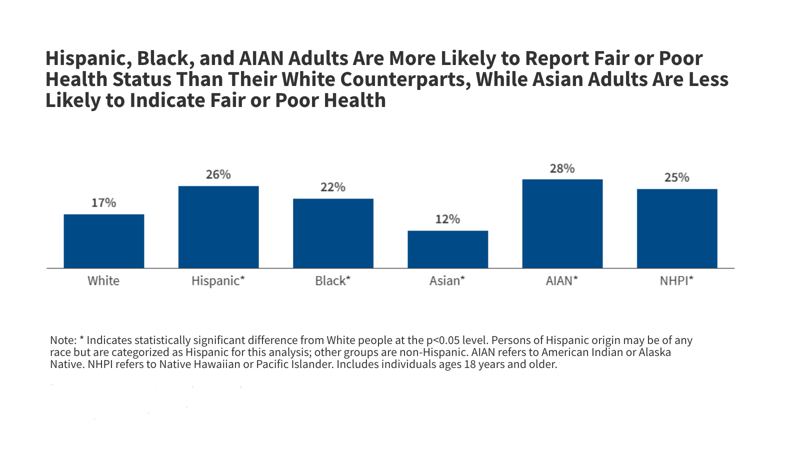
Federal surveillance data is critical for identifying disparities and the factors driving them, developing targeted interventions, directing resources appropriately, and establishing accountability for progress. However, data collection and reporting reductions will hamper these efforts. The analysis examines how people of color fare compared to white people across 64 measures of health, health care, and social and economic factors using the most recent available data from federal surveys and administrative sources.
Where possible, analysis presents data for six groups: White, Hispanic, Black, Asian, American Indian or Alaska Native, and Native Hawaiian or Pacific Islander populations. The comparative approach enables identification of where disparities exist and how they differ across populations—essential information for equitable health policy development and targeted public health interventions.
This article is an AI-assisted summary. All facts and figures are drawn from the original report: https://www.kff.org/racial-equity-and-health-policy/key-data-on-health-and-health-care-by-race-and-ethnicity/