New Medicaid plan aims to untangle care for NC foster children
 After years of pleading from the child welfare community, the N.C. Department of Health and Human Services recently rolled out a Medicaid plan that’s designed to simplify care for children and young adults in the child welfare system — a population that state officials say has long struggled to navigate a fragmented health care landscape.
About
32,000 children in foster care and former foster youth were automatically enrolled in the state’sChildren and Families Specialty Planwhen it launched on Dec. 1. Among other things, the program aims to prevent disruptions in services for children who had been receiving care in a different county before they entered the foster system.
These scenarios are common. A parent might face incarceration or be needing to enter treatment for substance use, and a relative steps in to care for their child.
But if that relative lives in a different part of the state, or even just two counties over, they would have been forced, under the old model, to either regularly travel to the county where the child had been receiving care, or navigate a complex web of managed care plans, provider networks and administrative rules to line up services closer to home.
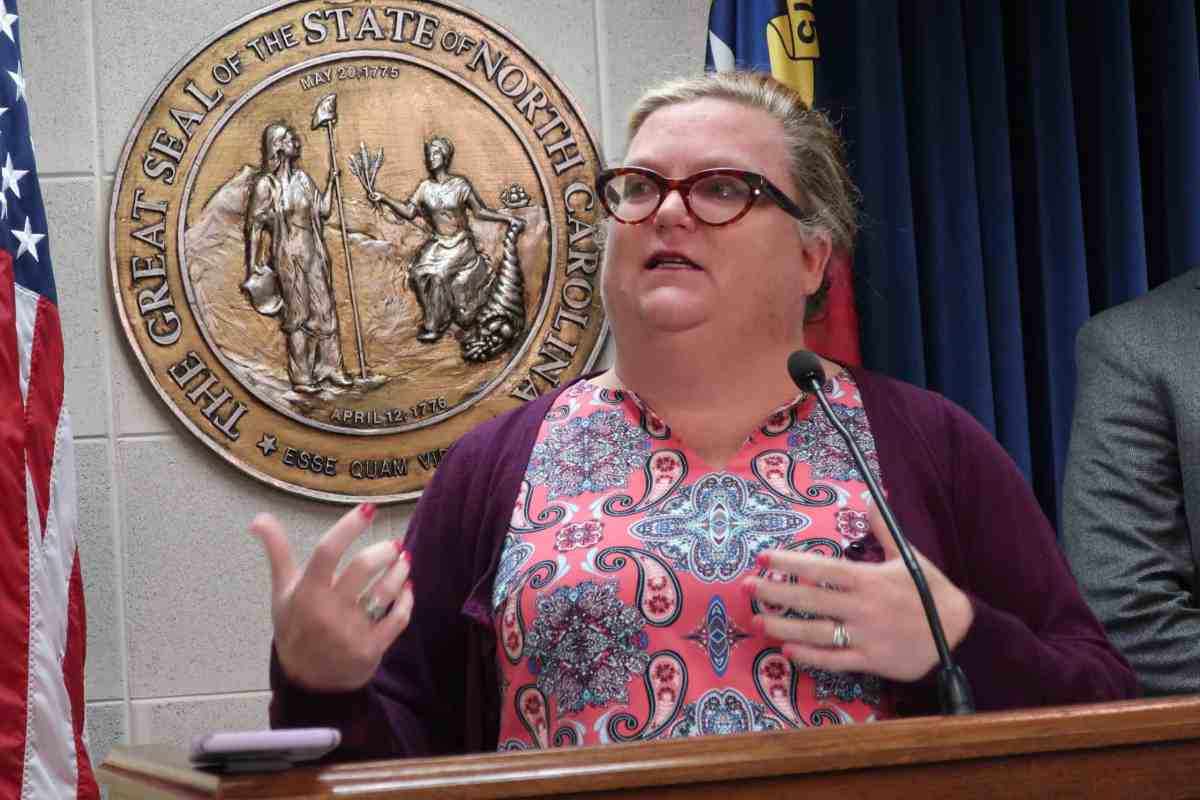
Lisa Tucker Cauley, director of human services for NC DHHS, said the specialty plan was designed to remove those barriers. “The services [now] go with children when they move,” she said. “Having one plan, one care manager, means that there’s continuity of care.” As the country’s ninth-largest state, North Carolina has a large number of kids in need. An NC Health News analysis of the mostrecent available datafrom the U.S.
Bureau of Child Welfare found that North Carolina had the nation’s 10th-highest number of children enrolled in foster care in 2023, with more than 10,800 kids in the system. Beforethe legislature mandated the Children and Families Specialty Plan’s creation, the foster parents, relatives and child welfare workers responsible for those kids often had to coordinate across multiple systems — one set of managed care plans for physical health and separate local behavioral health organizations — each with its own provider networks and rules.
The specialty plan replaces that patchwork with a single statewide network and assigns every enrolled child a care manager whose role is to help families and social workers find and coordinate services. “What the heart of this plan really is, is it makes it simpler,” Cauley said. “You have one plan and a care manager who navigates for the child welfare workforce, who navigates for the parents, who helps them find the services that this population of children need.” Jay Ludlam, deputy secretary of the state’s Medicaid program, said this approach reflects a broader shift away from dividing care into silos. “In the past, it was bifurcated,” he said. “Now by having a single statewide health plan, we’re taking many burdens off of these families and these kids as they do these transitions.” The plan is designed not only to help families, but also to ease pressure on county child welfare agencies, whose social workers must already juggle court appearances, placement monitoring and reunification planning alongside health-related tasks. “It lifts the responsibility of finding the provider of health and behavioral health from a child welfare social worker to the care manager,” Cauley said. “This is a significant lift, and a better way of doing the work.” Gaile Osborne, the head of Foster Family Alliance of NC, has fosteredmore than 40 childrenwith her husband since 2010. She began pushing 15 years ago for something like the Children and Families Specialty Plan after the couple had to wait more than three months to secure services for two siblings they took in from a different county.
Osborne said she’s “absolutely thrilled” that the plan has finally gone live. She recounted that part of the reason her organization was founded in 1975 was the frustration of trying to find services and support for people in caregiver roles for foster children. “The biggest thing about the new Medicaid specialty plan, is that when we get up and running and our providers are all in network, we’re going to have people who truly understand the medical needs of foster children and children that have been adopted with special needs,” Osborne wrote in a text message to NC Health News. “The other thing I wanna share is that the care coordinators are being assigned to every child versus a child having to qualify for Care Coordinator. “Again once they get up to speed and fully trained and this plan is rolling, you’re gonna have an expertise at the table with you […] to connect services.” Cauley said that 80 of the state’s 100 counties opted to have those care managers on site in their departments of social services, and the plan includes 24/7 support for after-hours crises. “This work does not end at six o’clock or even seven o’clock,” she said. “If you need services, any type of services, after hours, they have someone who is available who will navigate.
That’s a big win for county child welfare.” That around-the-clock access, Cauley added, is particularly crucial when children’s caregiving arrangements change placements unexpectedly or they require immediate behavioral health support. The state’s General Assembly authorized the Children and Families Specialty Plan in 2023 after years of discussion among state officials, county agencies and advocates about how Medicaid’s managed care system was failing children in the child welfare system. “It came about because there was so much angst over the kids losing access to care,” said Karen McLeod, president and CEO of the advocacy groupBenchmarks NC.
NC DHHS solicited bids from organizations interested in administering the plan before awarding the contract to Blue Cross Blue Shield of North Carolina in August 2024. Ina news releaseearlier this year, the insurance company said the plan would “ensure timely and consistent access to quality services, including mental and physical healthcare, while maintaining continuity of service delivery” for foster children across the state. “This pioneering plan underscores North Carolina’s dedication to improving the short- and long-term health outcomes for children and families involved in the child welfare system, ultimately strengthening and supporting North Carolina families,” the release said.
In addition to standard Medicaid benefits, NC DHHS said the plan will cover “most” of the same in-home services offered through the state’s“tailored” behavioral health plansfor beneficiaries with complex needs.
It will also address “unmet health-related resource needs” like housing, food and transportation, the agency said. The plan is part of a larger effort to reshape North Carolina’s child welfare system, which has faced scrutiny over children lingering in foster care,sleeping in county officesand cycling through residential placements.
Cauley said the plan is already being used to focus on children with complex behavioral health needs who are stuck in inappropriate settings, and will eventually integrate withPATH NC, the state’s new electronic child welfare case management system. “Our hope is, through this plan and through the electronic case management system, we will see more children in North Carolina not in congregate care and not in residential treatment settings that are group homes,” she said. “We want them to be able to live with families.” People eligible for the Children and Families Specialty Plan include: • Children adopted from foster care or placed in guardianship • Young adults who aged out of foster care up to age 26 • The minor children of those young adults A future phase of the plan is expected to extend services to children who are at risk of entering foster care but can remain safely at home with the right supports — an approach aimed at preventing removals before they happen. “Now that we’ve created a platform for families and providers and care managers and caseworkers, it’s time for us to start continuing to invest in the system and continuing to use the opportunity that we have presented ourselves to improve the lives of the people who rely on this program,” Ludlam said. “What I expect is, over the next couple of months, you’ll start to see kind of an acceleration of various initiatives that we have sought to do in the past or are planning to do as part of this program.” NC Health News Editor Rose
Hoban contributed to this story.
Judges reject arguments against
NC Certificate of Need law
Four years after promises, a plan for apartments at The Pearl
Iryna’s Law aims to improve public safety — but it may deepen jail and health care strains
Sticker shock: Obamacare customers confront premium spikes as congress dithers Republish our articles for free, online or in print, under a Creative Commons license. This work is licensed under aCreative Commons Attribution-NoDerivatives 4.0 International License.
You are free to use NC Health News content under the following conditions:You can copy and paste this html tracking code into articles of ours that you use, this little snippet of code allows us to track how many people read our story.Please do not reprint our stories without our bylines, and please include a live link to NC Health News under the byline, like this:By Jane DoeNorth Carolina Health NewsFinally, at the bottom of the story (whether web or print), please include the text:North Carolina Health News is an independent, non-partisan, not-for-profit, statewide news organization dedicated to covering all things health care in North Carolina. Visit NCHN at northcarolinahealthnews.org. (on the web, this can be hyperlinked) by Jaymie Baxley, North Carolina Health NewsDecember 19, 2025 Jaymie Baxley is an award-winning reporter covering rural health and Medicaid for NC Health News.
A lifelong North Carolinian, he previously worked at The Pilot in Moore County, The Robesonian in Robeson County and The Daily Courier in Rutherford County.
Reach him at jbaxley at northcarolinahealthnews.org
Source: https://www.northcarolinahealthnews.org/2025/12/19/foster-children-medicaid/